Tag: movies

  • How do streaming platforms keep you watching?

    How do streaming platforms keep you watching?

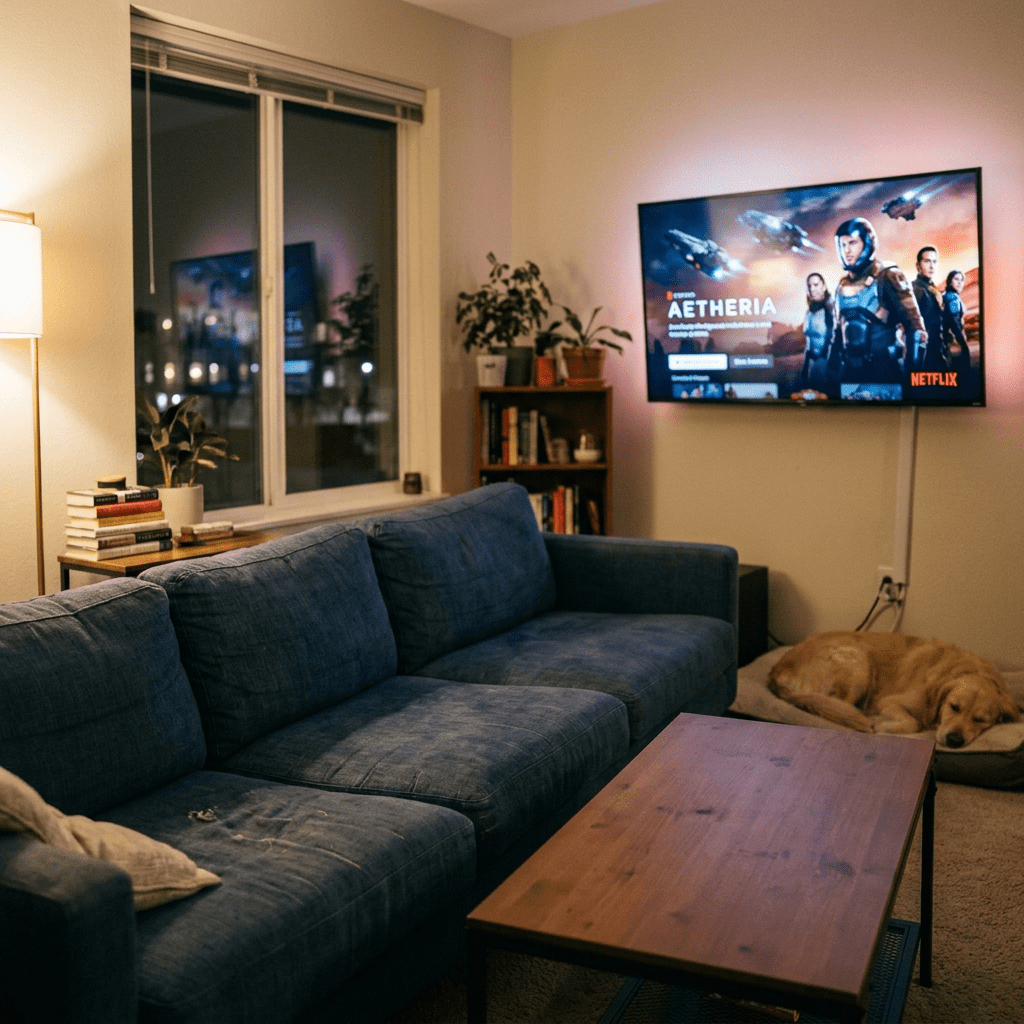
    It is midnight on a Tuesday. The credits roll on the episode of your favorite show. You know you have to wake up for work or school. You tell yourself that it is time for bed.

    Then a little timer appears in the corner. It counts down: 5… 4… 3…

    Before you can even reach for the remote the next episode of your show starts playing. You are too lazy to get the remote and change it so you decide one more episode of your show will not hurt.

    Netflix, Disney+ and Hulu are not just lucky that you stay up late watching your show. They design their apps to make sure you do. This is called the Attention Economy and the currency is not how they make money it is your time spent watching your show.

    Here is how streaming platforms like Netflix, Disney+ and Hulu use economics and human psychology to keep your eyes glued to the screen watching your favorite show.

    1. Removing the Friction

    In the world buying things requires effort. You have to pull out your wallet hand over cash or type in a credit card number. That moment of effort gives your brain a second to stop and think, “Do I really want to spend this money?”

    Streaming apps like Netflix, Disney+ and Hulu want to eliminate all effort when you spend your time watching your show. Another example would be apps saving your credit info so that you do not need to keep typing it in.

    By using Autoplay they take away your choice to stop watching your show. You don’t have to choose to watch another episode of your show. Instead, you have to actively decide to stop watching your favorite show. This is called a default bias. Humans are naturally lazy when it comes to watching their show. If the app defaults to playing the episode of your favorite show most of the time you will just let it happen and keep watching your favorite show.

    1. The Sunk Cost Fallacy

    Have you ever noticed how much easier it is to watch four 30-minute episodes of a comedy show like your show than it is to start a single two-hour movie?

    Even though they take up the exact same amount of time your brain looks at them differently because of how it calculates risk when watching your favorite show.

    If you start a two-hour movie and it is bad you feel like you wasted a chunk of your night watching your favorite show. A 30-minute episode of your favorite show feels like a low investment. Once you finish that short episode of your favorite show your brain says, “Well I have already invested 30 minutes into this story line of my favorite show I might as well see what happens next in my favorite show.” This is the cost fallacy—continuing to watch your favorite show just because you have already invested time into watching your favorite show.

    1. Hyper-Personalized Menus

    When you log into Netflix you see rows and rows of movies. Shows like your favorite show. It feels like a video store where you can pick anything including your favorite show.

    You are not actually seeing the whole library of your favorite show. You are seeing a curated storefront designed just for you and your favorite show.

    If you like comedies like your favorite show the app might change the poster artwork for a standard action movie to show the two main characters holding hands just to trick you into clicking it and watching your favorite show. If you like horror they will show you the image from that same movie, which is similar to your favorite show.

    If you spend 20 minutes scrolling without finding anything you will close the app. Go to sleep and not watch your favorite show. You do not get to watch your favorite show. So they feed you what your brain wants to see the second you open the app to watch your favorite show.

    4.The Big Picture

    Former Netflix CEO Reed Hastings once famously said that Netflixs biggest competitor is not HBO or cable TV—it is sleep, which keeps you from watching your show.. Sleep is losing, because you are watching your favorite show.

    Streaming platforms, like Netflix, Disney+ and Hulu are a business. They need you to stay subscribed and to do that they need to be a habit, where you watch your favorite show every day. By using autoplay, personalized artwork and short episodes of your show they turn entertainment into an addictive loop, where you keep watching your favorite show.

    So the time that little timer starts counting down to the next episode of your favorite show remember: you are being nudged to keep watching your favorite show. Grab the remote hit pause and take back control of your valuable resource: your time spent watching your favorite show.
  • How do Movie Theaters profit off of Cheap Tickets?

    How do Movie Theaters profit off of Cheap Tickets?

    The Ticket is Not the Product

    Here is something most people do not know about movie theaters. A theater keeps very little of what you pay for your ticket. Studios typically take 50 to 60 percent of box office revenue, sometimes more in the opening weeks of a blockbuster. The theater is essentially a middleman selling access to someone else’s content and keeping a minority share of the sale.

    The real product is everything that happens after you walk through the door. Popcorn, soda, candy, and now alcohol at premium venues. Concession margins run as high as 85 percent. A bucket of popcorn that costs a theater roughly 25 cents sells for six dollars. That gap is where theaters actually make their money, and it only opens up if you get people through the door in the first place.

    The Economics of Empty Seats

    A movie theater has what economists call high fixed costs and very low marginal costs. The rent, the projector, the staff, the electricity: these costs exist whether ten people show up or two hundred. Once those costs are covered, each additional customer costs the theater almost nothing extra to serve. An empty seat is pure lost revenue with no offsetting savings anywhere.

    This is the core economic argument for cheaper tickets. If a theater charges twenty dollars and fills half its seats, it earns less than if it charges twelve dollars and fills eighty percent of them. More importantly, eighty percent capacity means far more concession sales, which is where the real margin lives. A cheaper ticket that drives a full house beats an expensive ticket that drives a half-empty one almost every time.

    What AMC proved With A Dollar Tuesday

    AMC theaters ran a promotion offering five dollar tickets on discount days, and attendance on those days jumped significantly while concession revenue followed right along with it. The same logic drove the rise of MoviePass and later AMC’s own A-List subscription. Lower the barrier to entry, increase visit frequency, and capture more spending once the customer is inside.

    The movie theater business is structurally similar to airlines, sports stadiums, and amusement parks: industries where the entry price is the hook and the real revenue comes from what customers do after they arrive. Southwest built a loyal following on cheap base fares. Stadiums price general admission accessibly and profit on beer and merchandise. Theaters can run the same playbook.

    Streaming Did Not Kill the Theater. Pricing Might.

    The common narrative is that Netflix and streaming destroyed movie theaters. The data tells a more complicated story. When theaters offer a genuinely good value, people still show up. Barbie and Oppenheimer proved that a cultural moment can fill seats regardless of what is available at home. The problem is that at twenty dollars a ticket plus fifteen dollars in concessions, a family of four is spending over a hundred dollars for a single outing. At that price, streaming wins the comparison almost every time.

    Cheaper tickets change the math. A ten dollar ticket reframes the theater not as a luxury splurge but as a reasonable night out. It lowers the psychological barrier for casual moviegoers who might otherwise wait for a film to hit a streaming platform. More visits per year from more people compounds quickly into more concession revenue and a healthier business overall.

    The Risk and the Reward

    There is a real risk to cutting ticket prices. If studios see theater revenue per ticket drop, they may push for a larger share of a smaller pie or accelerate the shrinking theatrical window. Theaters would need to negotiate carefully and make up the difference in volume and concession sales. The model only works if cheaper tickets reliably drive meaningfully higher attendance.

    The evidence suggests they do. Price elasticity in entertainment is high, meaning audiences respond strongly to price changes. A movie that costs the same as a streaming subscription for one night looks expensive. A movie that costs less than a restaurant appetizer looks like a bargain. The theater industry has the product, the infrastructure, and the irreplaceable communal experience. The missing piece is a price that makes the choice easy.