Tag: writing

  • The Hidden Math of Happy Hour

    The Hidden Math of Happy Hour

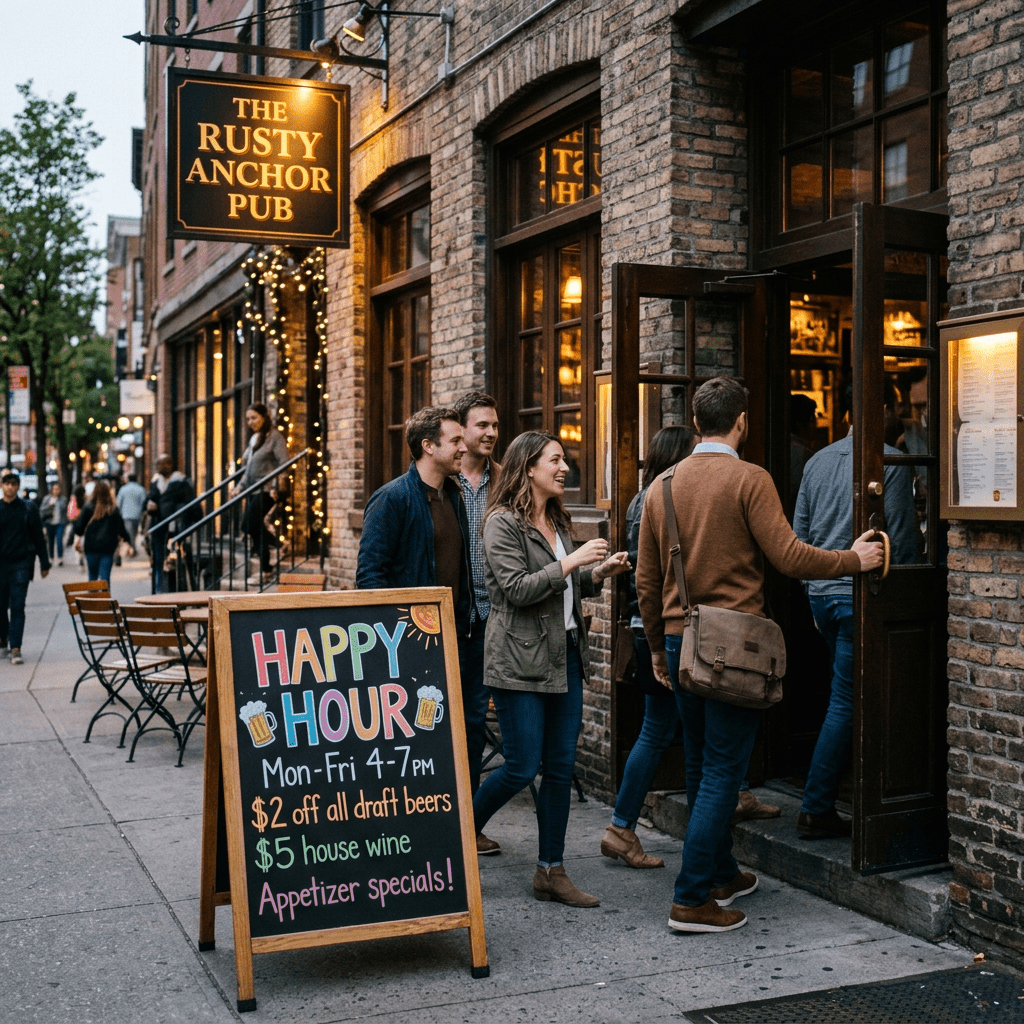
    It all begins enough. You are walking home from work. You spot a chalkboard sign advertising half-price wings and four dollar drafts from four to seven PM. This sounds like a deal so you head inside and you place your order. The manager in the back is pleased because everything is going just as planned at the bar.

    Happy hour is not about being generous to customers at the bar. It is actually a way for the bar to make money. To see why the bar uses this strategy it helps to know three concepts that economists have studied for years: price discrimination, consumer surplus and elasticity of demand at the bar.

    Price discrimination is something that happens all the time at the bar. It means that different people pay prices for the same thing at the bar based on how much they are willing to pay for it at the bar. Consumer surplus is the difference between what you would have paid for something at the bar and what you actually paid for it at the bar. Businesses like the bar want this difference to be as small as possible because that means they get to keep more of the money from the customers at the bar. Elasticity of demand is about how peoples willingness to buy something at the bar changes when the price changes at the bar. Some people are very sensitive to the price at the bar while others do not really care about the price at the bar.

    Happy hour at the bar is an example of all three of these things. It happens every day at the bar. It is like a game that the bar plays with its customers at the bar.

    • The people who come to the bar at five PM are often different from the people who come to the bar at eight PM.
    • The early crowd at the bar is usually looking for a deal because they are on a budget or they just want to grab a drink before they go home from the bar.
    • The later crowd at the bar is often there for an occasion, like a date or a celebration. They are not as worried about the price at the bar.

    The bar is not giving you a discount just because it likes you. The bar is using a price to get customers who would not normally come to the bar. If the bar charged eight dollars per drink it would lose all the customers looking for a deal at the bar. If it charged four dollars per drink it would lose money from customers to pay more at the bar. Happy hour at the bar solves this problem by charging one price for the crowd and another price for the crowd at the bar.

    Let us say there is a bar that has one hundred customers. Half of them would pay up to nine dollars for a beer at the bar. The other half would only pay up to five dollars for a beer at the bar. If the bar charges nine dollars for every beer it will only sell fifty beers. Make four hundred fifty dollars. If it charges five dollars for every beer it will sell one hundred beers. Make five hundred dollars. If it charges five dollars during hour and nine dollars at night it will sell fifty beers at each price and make seven hundred dollars. That is a forty percent increase in revenue from pricing things at the bar.

    This is not something that just the bar does. You see it everywhere once you start looking.

    • Movie theaters have prices for showings.
    • Stores have discounts for seniors and students.
    • Hotels charge prices on weekends and weekdays.
    • Airlines charge business travelers more than they charge people who are just going on vacation.
    • Amazon charges its Prime members differently than it charges customers.
    • Gyms have prices for peak and off-peak hours.

    Even streaming services do this. Netflix charges more for plans that let you watch on screens at the same time because it knows that people who need that feature are probably wealthier and less worried about the price.

    Is this fair? That is a question. If businesses could charge every person what they’re willing to pay that would be great for the businesses but it might not be so great for the customers. It is like a game, where the businesses are trying to figure out how much they can charge without losing customers.

    In some cases this can be a problem. For example if a company is charging people more for something they need like medicine or rent that can be unfair. When it comes to something like a beer on a Tuesday most economists would say that happy hour at the bar is a thing. The people who are looking for a deal get to have a beer that they might not have been able to afford and the bar gets to make some money that it might not have made otherwise.

    The important thing to remember is that prices are not numbers. They are choices that businesses like the bar make based on what they think their customers will pay. You as a customer have the power to make choices too. You can decide when to buy things and how much you’re willing to pay. It is like a game that you play with the businesses. It is happening all the time.

    So when you go to hour at the bar remember that you are not just saving money. You are playing a role in a game that involves buyers and sellers. You are helping to determine the prices that businesses, like the bar charge. You are winning. The bar is winning too. That is how things are supposed to work in a market.

  • Is Black Friday Really the Cheapest Day of the Year?

    Is Black Friday Really the Cheapest Day of the Year?

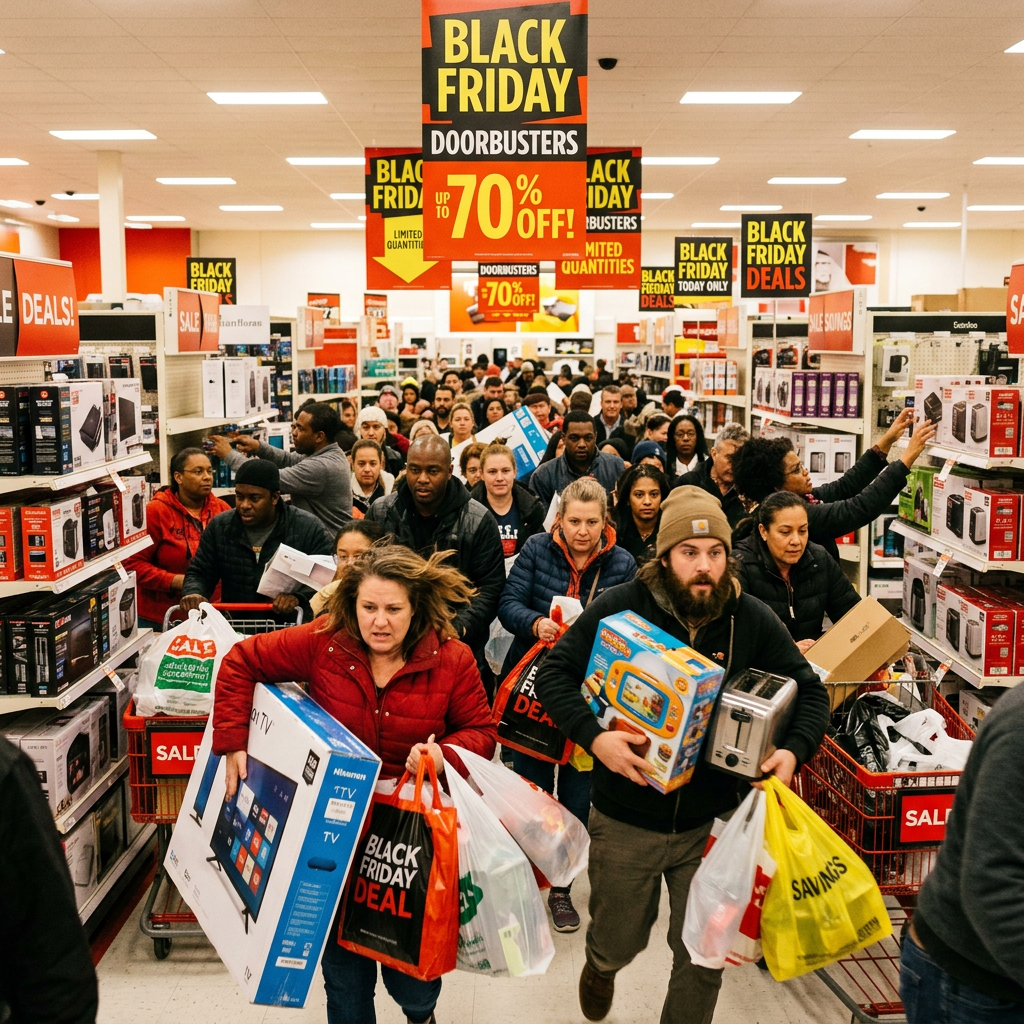
    Economics is around us even when we are rushing to buy something at 3am. Let us see what the numbers say about the shopping day of the year.Black Friday discounts are real but they are rarely the best discounts of the year. Economists have a reason for this.Every November people do something. They set their alarms for midnight stand in lines in the cold and keep checking their browsers. The idea is simple: everything is cheaper today.

    Is that true? Economics, which is the study of how people make choices when they do not have enough gives us an answer. When we look at this answer we see how much economic ideas shape our world without us realizing it.

    The story of supply and demand

    At a level Black Friday is a lesson in how prices affect demand. When prices go down people want to buy more. Stores know this so they use discounts to get rid of old stock and attract shoppers who might buy more.

    Here is the thing: not all products have the same discount and the ones with the biggest discounts are not always the ones people want the most. That big TV with a 40% discount might be an item that the store bought just to get people in the door.

    This is where behavioral economics comes in. One of the forces at work on Black Friday is not the discount itself but what economists call price anchoring. When you see a sofa that costs $1,200 then it is discounted to $749 your brain thinks $1,200 is the price. The $749 feels like a deal.

    The truth is that stores often raise the price a few weeks before Black Friday to make the discount look bigger. The Federal Trade Commission has rules against this. Studies show that many Black Friday “deals” were available at the same or lower price earlier in the year.

    How shoppers are changing

    Classical economics says that markets work best when buyers and sellers have the information. Black Friday used to be a time when sellers knew more than buyers.. The internet has changed that. Now people can see the price history of a product over 12 months. What they find is surprising: for popular items the Black Friday price is good but not the best.

    The best deal is not always the one that is advertised the most. Markets reward people who’re patient and informed, which is not what Black Friday is about.

    How scarcity affects us

    Scarcity is an idea in economics. When something is limited people think it is more valuable. Stores use scarcity on Black Friday with tactics like “only 3 left!”. This creates a sense of urgency that makes people act without thinking.This is not a mistake it is how the system works. The point of a limited-time sale is to take the consumers most powerful tool: patience.

    So when should you buy?

    The answer varies depending on what you’re buying. Electronics are usually cheapest around Black Friday and Cyber Monday. For most other things the data says something different.

    Clothing is cheapest at the end of the season. Furniture is cheapest on holiday weekends. Toys are cheapest after December 26. Mattresses are always on sale. It is hard to know what a good price is.

    ~$9.8B

    This is how much people spent online on Black Friday in 2024 a record. Researchers think that many of those “deals” were available at the same price earlier in the year.

    The verdict: day, not the best day

    Black Friday is real and there are discounts, especially for electronics. It is not the cheapest day of the year and the way it is set up is designed to make you spend more than you planned while feeling like you saved.The best way to shop is to use tools to track prices make a list and wait for the deal. The best deals often go to people who’re patient and do not let the urgency of the sale make them act without thinking.

    Economics is everywhere. It is especially visible, in the way sales are set up.

  • How do Movie Theaters profit off of Cheap Tickets?

    How do Movie Theaters profit off of Cheap Tickets?

    The Ticket is Not the Product

    Here is something most people do not know about movie theaters. A theater keeps very little of what you pay for your ticket. Studios typically take 50 to 60 percent of box office revenue, sometimes more in the opening weeks of a blockbuster. The theater is essentially a middleman selling access to someone else’s content and keeping a minority share of the sale.

    The real product is everything that happens after you walk through the door. Popcorn, soda, candy, and now alcohol at premium venues. Concession margins run as high as 85 percent. A bucket of popcorn that costs a theater roughly 25 cents sells for six dollars. That gap is where theaters actually make their money, and it only opens up if you get people through the door in the first place.

    The Economics of Empty Seats

    A movie theater has what economists call high fixed costs and very low marginal costs. The rent, the projector, the staff, the electricity: these costs exist whether ten people show up or two hundred. Once those costs are covered, each additional customer costs the theater almost nothing extra to serve. An empty seat is pure lost revenue with no offsetting savings anywhere.

    This is the core economic argument for cheaper tickets. If a theater charges twenty dollars and fills half its seats, it earns less than if it charges twelve dollars and fills eighty percent of them. More importantly, eighty percent capacity means far more concession sales, which is where the real margin lives. A cheaper ticket that drives a full house beats an expensive ticket that drives a half-empty one almost every time.

    What AMC proved With A Dollar Tuesday

    AMC theaters ran a promotion offering five dollar tickets on discount days, and attendance on those days jumped significantly while concession revenue followed right along with it. The same logic drove the rise of MoviePass and later AMC’s own A-List subscription. Lower the barrier to entry, increase visit frequency, and capture more spending once the customer is inside.

    The movie theater business is structurally similar to airlines, sports stadiums, and amusement parks: industries where the entry price is the hook and the real revenue comes from what customers do after they arrive. Southwest built a loyal following on cheap base fares. Stadiums price general admission accessibly and profit on beer and merchandise. Theaters can run the same playbook.

    Streaming Did Not Kill the Theater. Pricing Might.

    The common narrative is that Netflix and streaming destroyed movie theaters. The data tells a more complicated story. When theaters offer a genuinely good value, people still show up. Barbie and Oppenheimer proved that a cultural moment can fill seats regardless of what is available at home. The problem is that at twenty dollars a ticket plus fifteen dollars in concessions, a family of four is spending over a hundred dollars for a single outing. At that price, streaming wins the comparison almost every time.

    Cheaper tickets change the math. A ten dollar ticket reframes the theater not as a luxury splurge but as a reasonable night out. It lowers the psychological barrier for casual moviegoers who might otherwise wait for a film to hit a streaming platform. More visits per year from more people compounds quickly into more concession revenue and a healthier business overall.

    The Risk and the Reward

    There is a real risk to cutting ticket prices. If studios see theater revenue per ticket drop, they may push for a larger share of a smaller pie or accelerate the shrinking theatrical window. Theaters would need to negotiate carefully and make up the difference in volume and concession sales. The model only works if cheaper tickets reliably drive meaningfully higher attendance.

    The evidence suggests they do. Price elasticity in entertainment is high, meaning audiences respond strongly to price changes. A movie that costs the same as a streaming subscription for one night looks expensive. A movie that costs less than a restaurant appetizer looks like a bargain. The theater industry has the product, the infrastructure, and the irreplaceable communal experience. The missing piece is a price that makes the choice easy.