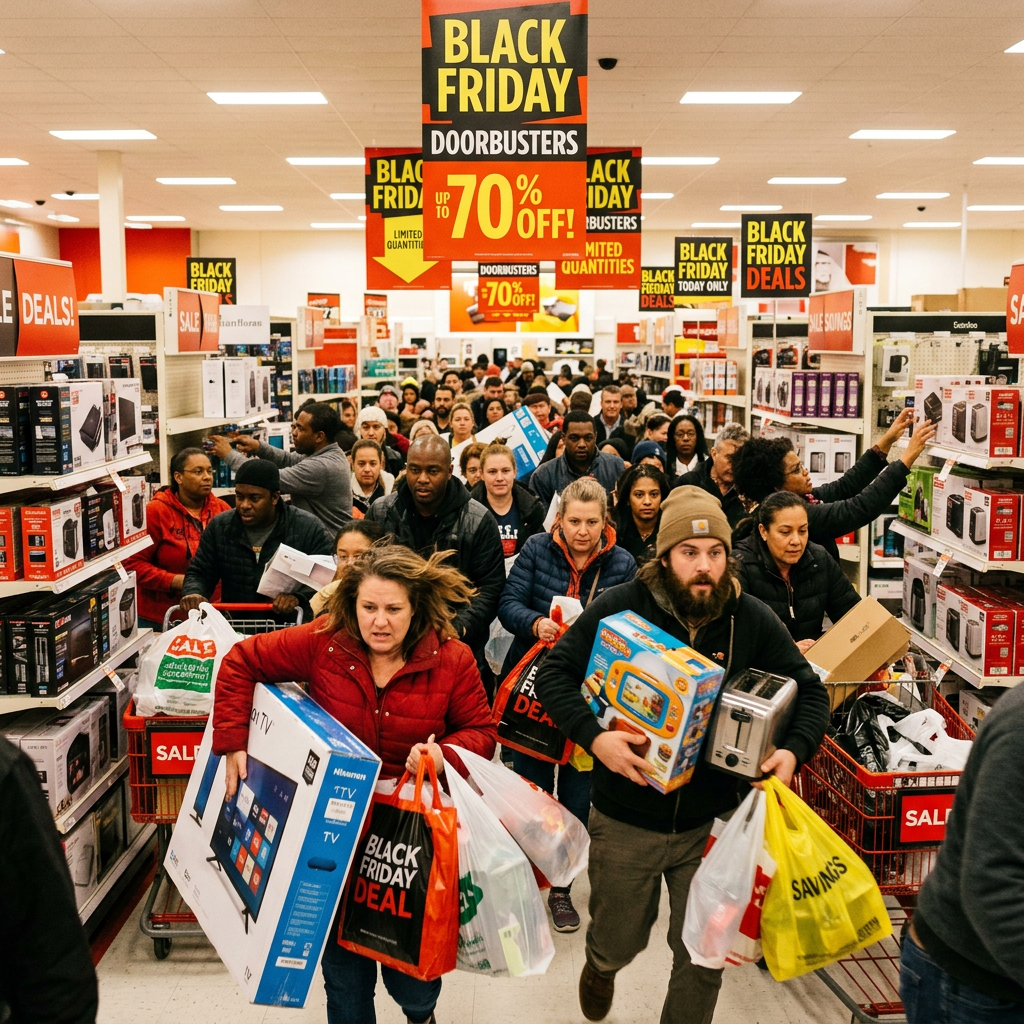
Economics is around us even when we are rushing to buy something at 3am. Let us see what the numbers say about the shopping day of the year.Black Friday discounts are real but they are rarely the best discounts of the year. Economists have a reason for this.Every November people do something. They set their alarms for midnight stand in lines in the cold and keep checking their browsers. The idea is simple: everything is cheaper today.
Is that true? Economics, which is the study of how people make choices when they do not have enough gives us an answer. When we look at this answer we see how much economic ideas shape our world without us realizing it.
The story of supply and demand
At a level Black Friday is a lesson in how prices affect demand. When prices go down people want to buy more. Stores know this so they use discounts to get rid of old stock and attract shoppers who might buy more.
Here is the thing: not all products have the same discount and the ones with the biggest discounts are not always the ones people want the most. That big TV with a 40% discount might be an item that the store bought just to get people in the door.
This is where behavioral economics comes in. One of the forces at work on Black Friday is not the discount itself but what economists call price anchoring. When you see a sofa that costs $1,200 then it is discounted to $749 your brain thinks $1,200 is the price. The $749 feels like a deal.
The truth is that stores often raise the price a few weeks before Black Friday to make the discount look bigger. The Federal Trade Commission has rules against this. Studies show that many Black Friday “deals” were available at the same or lower price earlier in the year.
How shoppers are changing
Classical economics says that markets work best when buyers and sellers have the information. Black Friday used to be a time when sellers knew more than buyers.. The internet has changed that. Now people can see the price history of a product over 12 months. What they find is surprising: for popular items the Black Friday price is good but not the best.
The best deal is not always the one that is advertised the most. Markets reward people who’re patient and informed, which is not what Black Friday is about.
How scarcity affects us
Scarcity is an idea in economics. When something is limited people think it is more valuable. Stores use scarcity on Black Friday with tactics like “only 3 left!”. This creates a sense of urgency that makes people act without thinking.This is not a mistake it is how the system works. The point of a limited-time sale is to take the consumers most powerful tool: patience.
So when should you buy?
The answer varies depending on what you’re buying. Electronics are usually cheapest around Black Friday and Cyber Monday. For most other things the data says something different.
Clothing is cheapest at the end of the season. Furniture is cheapest on holiday weekends. Toys are cheapest after December 26. Mattresses are always on sale. It is hard to know what a good price is.
~$9.8B
This is how much people spent online on Black Friday in 2024 a record. Researchers think that many of those “deals” were available at the same price earlier in the year.
The verdict: day, not the best day
Black Friday is real and there are discounts, especially for electronics. It is not the cheapest day of the year and the way it is set up is designed to make you spend more than you planned while feeling like you saved.The best way to shop is to use tools to track prices make a list and wait for the deal. The best deals often go to people who’re patient and do not let the urgency of the sale make them act without thinking.
Economics is everywhere. It is especially visible, in the way sales are set up.


Leave a comment