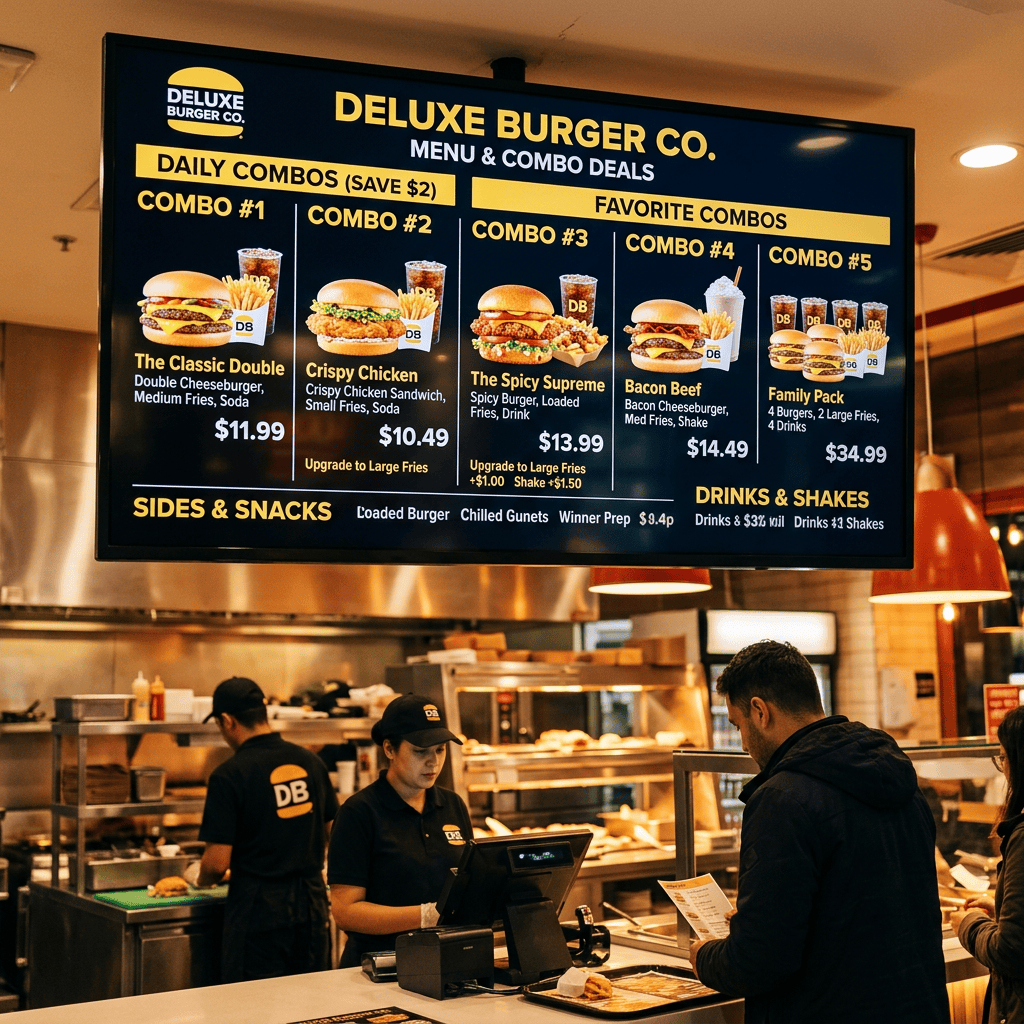
You walk to the counter in a fast-food restaurant and just want a hamburger. But then you look at the menu.
A burger by itself is $7. But for $3 more, you can turn it into a “Combo Meal” with a large fry and drink. You think, “Well, I can get a soda for $2.50, so now I’m just paying for the drink and eating the fries for free!”
Congratulations-you have just been exposed to one of the most lucrative pricing strategies in today’s business world: pure and mixed bundling.
1. The Intrigue of Margin Inflation
Fast food items do not have the same profit margins:
The Main Item (Burger/Chicken): Cost a lot of money to produce. Beef, chicken and cheese cost a lot more than the sides. There is not a lot of profit to be made.
The Sides (Fries & Soda): Logistically, these are very inexpensive to make. A fountain soda costs the restaurant a few cents for the syrup, the carbonated water, and the paper cup. French fries are largely a commodity of cheap potatoes and oil.
The restaurant exaggerates its profit for the entire order by combining expensive foods with ultra-low-cost foods.
2. Capturing Consumer Surplus
In economics, this difference is called a consumer surplus, which is the difference between what you are willing to pay for an item versus what you pay.
Had you $11 in your pocket and were ready to blow it on lunch, when you buy a $7 burger, then you are left with $4 of consumer surplus in your pocket. With the combo you are left with just $3 in your pocket, instead of that extra $4.
Bottom Line
Fast food combos aren’t actually about saving money. They are about raising the store’s AOV. They make you spend more money in total, and they sell the store its highest margin items.


Leave a Reply