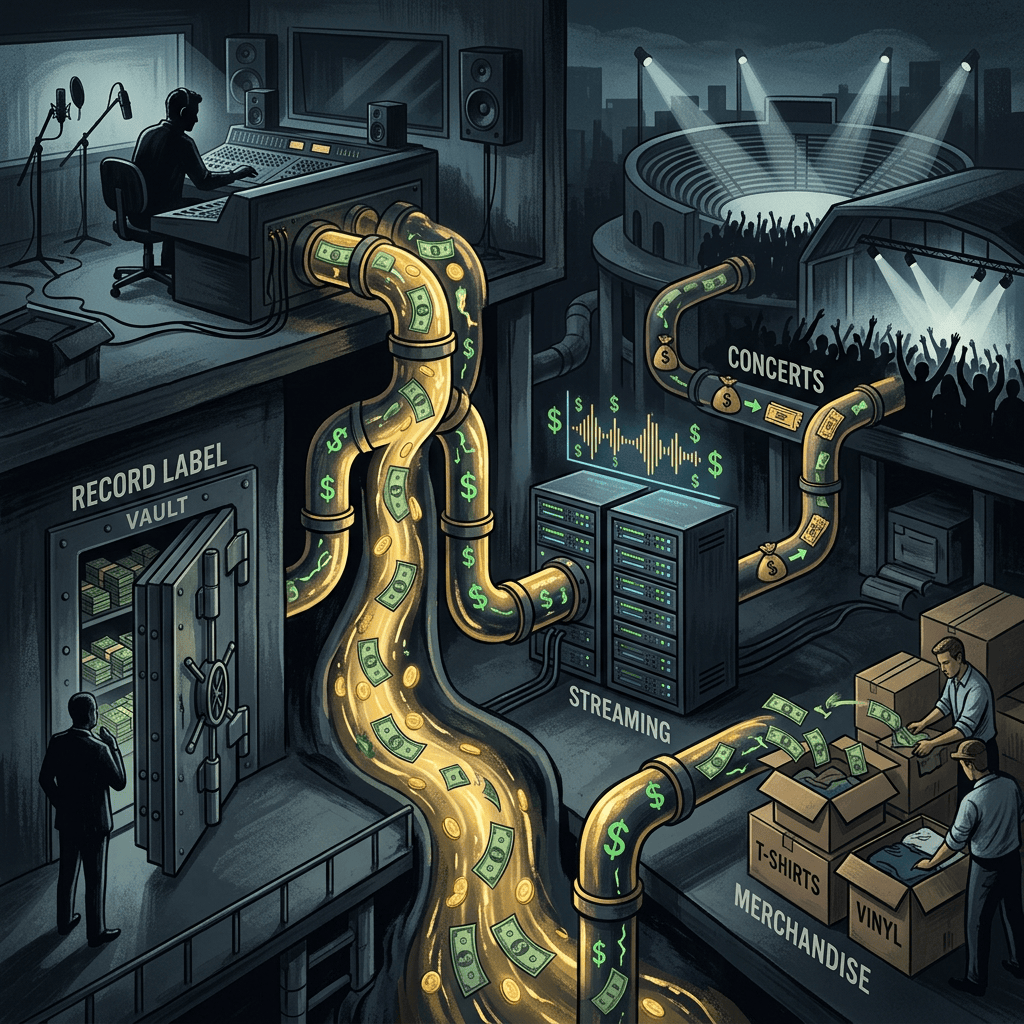
We see hit musicians owning mansions and exotic sports cars. We read about hit tunes making musicians rich. It’s so easy to get the false impression that the instant you hit a song, you make yourself a million.
Actually, the music industry is built on a stark financial structure called the venture capital model, driven by the record label advances.
1. The Record Advance as a Loan
When an artist signs a recording contract, they often receive a large cash check called an advance.
That advance is not a gift or even a salary – it’s a recoupable loan. You have to return it all, dollar for dollar, from the artist’s future royalties before they’ll get their first royalty check.
Because label contracts frequently provide the record company with an 80% share of earnings and the artist with a 20% share, an artist must first make a several million dollar sales figure in order to pay off a small advance.
2. Streaming Margins and Asymmetric Payouts
These days, most streaming services pay about $0.003 to $0.005 per stream. That’s maybe only $3,000 to $5,000 for a million streams.
Once it’s paid out to the record label, publishers, managers, lawyers, and producers, the recording artist may only earn a tiny bit of that money.
3. Monetizing the Touring & Merch Monopoly
As recorded music is a low-margin product to the artist, their main source of income turns to be live performance and merchandise:
Concerts: They make more money from ticket sales.
Merchandise: t-shirts and vinyl.
Nowadays recording artists are less like employees and more like startups. The music itself is nearly a gratuitous marketing exercise for the real cash cow – the live experience and physical merchandise.


Leave a Reply