Visit any retail outlet in October and you will find dedicated aisles where they have pumpkin and skeleton costumes, fall decor, and early holiday toy sections.
November and December, the toy sales start to explode – up to 50 percent of the toy industry’s annual revenue is achieved in just two months.
This isn’t just any wandering shopping phenomenon either. The toy industry survives by the demand curve for holiday shopping season, efficient obsolescence, and whip effects.
1. Controlling Inventory Costs
Toys are bulky to store in a warehouse, which means you are paying to hold physical inventory in stock. The stock also has to be stored (and can be damaged or lost).
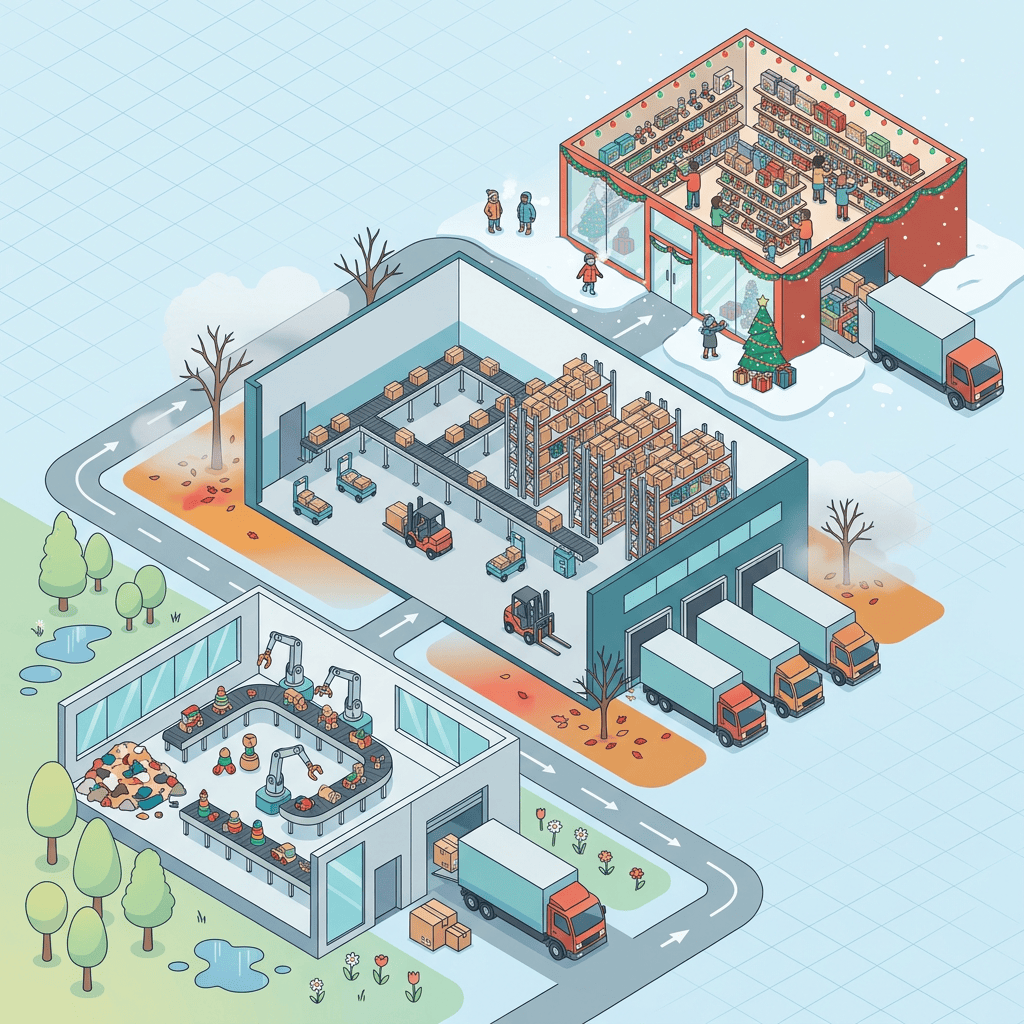
Toy companies focus their supply chain on a seasonal production schedule:
Spring/Summer: Factories have traditional mass production of product on the other side of the world with ships going by sea.
Fall: Retailers build up warehouse stock.
Holiday Season: Max out retail, sell to retail at full retail, take full retail.
In the event that a retailer overestimates demand and leaves unpurchased holiday toys in its inventory after January 1 st, the toys instantly become economically obsolete. That retailer would need to conduct significant markdowns in order to clear the shelves of the remaining inventory to make way for the spring inventory.
2. Artificial Scarcity & The “Must Have” Toy
Each year, toy companies attempt to develop one or two “must-have” selections for the holidays.
Demand stuffing: intentionally reducing supply of hot products is called demand stuffing or panic buying. This allows retailers to sell remaining products at regular prices when they notice their shelves are empty because consumers are afraid they might not get it.
The Bottom Line
The toy industry is a high-stakes balancing act of supply-chain forecasting. Manufacturers stockpile inventory nine months in advance for a three-week period where parents are happy to pay peak prices.


Leave a Reply